What "large print" really means
Print size is measured in points. Most books use 10 to 12 point, and newspapers often less. The RNIB, a leading sight-loss charity, describes clear print as usually 14 point, large print as 16 point or higher, and giant print as 18 point or larger. The American Printing House for the Blind says a document isn't truly large print below 18 point.
Puzzle books add a twist: the letters in a word search sit in a tight grid, with no spaces between words to guide the eye. That's why it pays to check the grid letter size, not just the words "large print" on the cover. For many readers, grid letters of around 20 point or more feel noticeably easier than a typical puzzle book.
Quick test: print one page or open the "Look inside" preview, hold it at a normal reading distance in normal room light, and ask the person to read a row of the grid aloud. If they're leaning in or squinting, look for bigger letters.
Try it first: download our free large-print word search, with about 21-point grid letters and words that run only across or down.
Choosing the right level
Big letters are only half the story. These four things decide whether a puzzle feels relaxing or frustrating:
- How many words to find. Six words is a gentle, quick win. Twelve or more makes a longer session.
- Which directions words run. Puzzles where words run only across or down are the easiest. Diagonal and backward words add real challenge.
- Grid size. A smaller grid with bigger letters is easier to scan than a large, dense grid.
- Familiar themes. Words from everyday life, music or favorite places are easier to spot, and they often spark a story or two.
A simple guide
- Easy: about 6 words, across and down only, very large letters. Good for a relaxed few minutes, for someone getting back into puzzles, or for solving together.
- Medium: about 12 words, across and down only. A satisfying session for a regular puzzler.
- Challenge: words in all eight directions, including backward. For keen solvers who want to hunt.
If a puzzle feels too hard, step down a level without fuss. The goal is enjoyment, not a score.
Small changes that make reading easier
- Light the page, not just the room. A lamp that shines directly on the puzzle helps more than a brighter ceiling light. Position it to avoid glare.
- Choose matte paper. Glossy paper reflects light. If you print puzzles at home, regular uncoated paper works well.
- Go bold with the pencil. A soft pencil, a felt-tip pen or a highlighter shows up more clearly than a hard pencil.
- Use a firm surface. A clipboard or a lap tray keeps the page steady and at a comfortable angle.
- Keep glasses and a magnifier nearby. Many people need their reading glasses for puzzles even with large print. A simple handheld magnifier can help with word lists.
- Get eyes checked. If reading has become harder lately, an eye exam is a good idea, since vision can change over time.
Solving together
A word search is one of the easiest puzzles to share across generations. A few ideas:
- Divide the list. One person reads a word aloud; the other hunts for it.
- Talk about the theme. A puzzle about drive-in movies or a family kitchen is a natural opener: "Did you ever go to a drive-in?"
- Make it a routine. One puzzle with morning coffee, or one during a weekly visit, is something to look forward to.
- Let grandchildren help. Kids who can read are great word spotters, and big letters suit young eyes too.
If you're caring for someone living with dementia, our guide to gentle activities for seniors living with dementia has ideas for each stage.
What puzzles can and can't do
Word searches are a pleasant way to relax, stay engaged and spend time together. But it's worth being clear: researchers have not shown that puzzles or "brain training" prevent dementia. Expert panels describe the evidence for cognitive training as encouraging but not conclusive, and that refers to structured training programs, not everyday puzzles. Enjoy puzzles for what they are, alongside the things known to support healthy aging, such as staying active and connected.
Our large print word search books
These paperbacks are printed and shipped by Amazon on roomy 8.5 x 11-inch pages. The word search books have one puzzle per page and marked answer grids. The sudoku book has two big grids per page, with all solutions at the back.
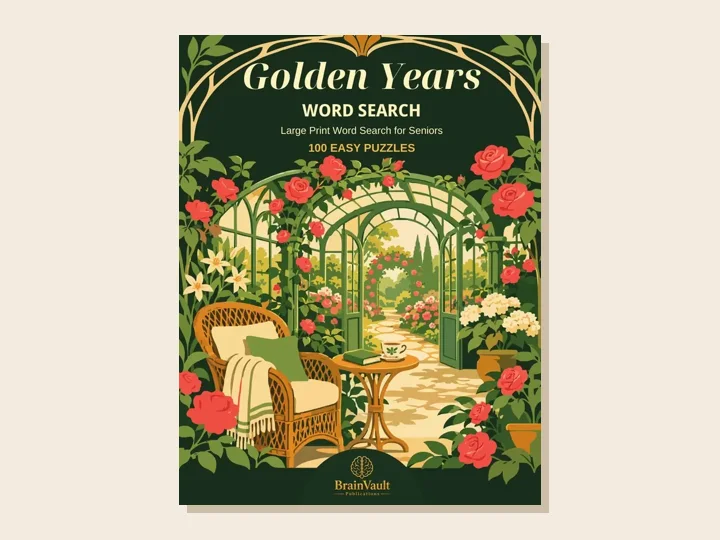
Golden Years
Easy. 100 puzzles with just six words each, running across or down only, with 26-point grid letters. Nostalgic themes from soda fountains to county fairs.
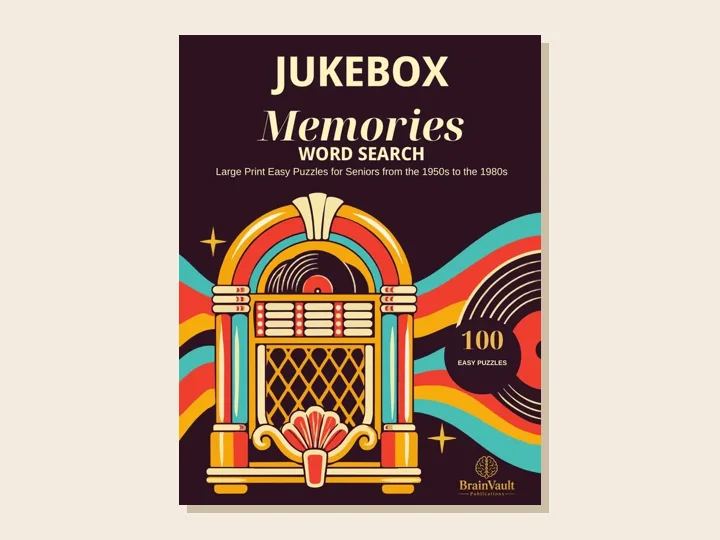
Jukebox Memories
Medium. 100 large-print puzzles with 12 words each, across or down only, celebrating the 1950s to the 1980s: sock hops, roller rinks, cassette tapes and more.
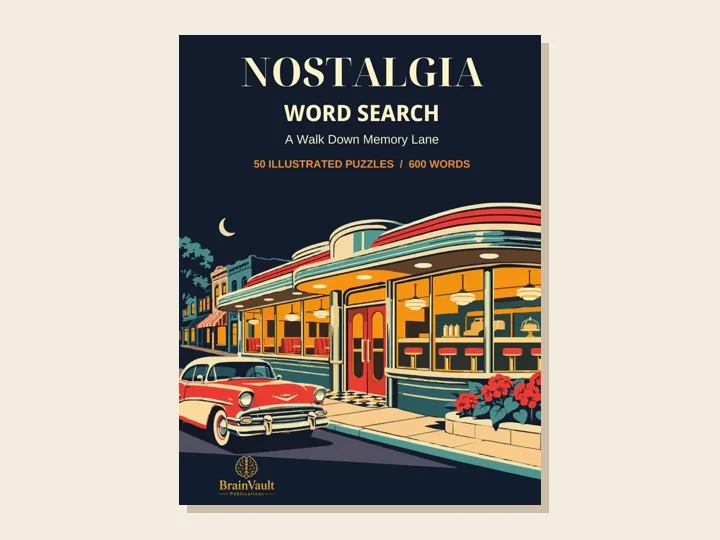
Nostalgia Word Search
Challenge. 50 illustrated puzzles with 22-point grid letters, where words run in all eight directions. Themes from the family kitchen to a trip downtown.
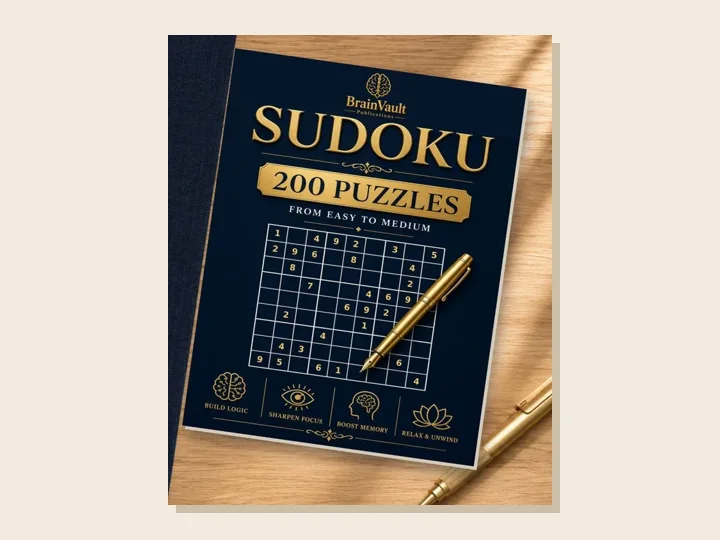
Large Print Sudoku
Something different. 200 sudoku puzzles, easy to medium, with bold 24-point digits and room for pencil notes beside every grid.
Prefer to print at home?
Our printable Christmas Word Search has 50 large-print Christmas puzzles for adults and seniors, in US Letter and A4, for $6.99. Print as many copies as your family needs.
Sources
- RNIB: What are the different font sizes, such as clear print, large print and giant print?
- American Printing House for the Blind: Research-Based Large Print Guidelines
- American Foundation for the Blind: Tips for new vision loss (lighting, glare and bold pens)
- Alzheimer's Society: Brain training and dementia
- Michigan Medicine: Can Brain Games and Exercise Prevent Dementia? We Don't Know Yet (on the National Academies report)
This guide is general information, not medical advice. If you notice changes in vision or memory, talk to a doctor.
Common questions
What font size is large print?
Low-vision organizations call 16 point and up large print, and 18 point and up is usually the minimum for true large print or giant print. For word searches, check the grid letters: around 20 point or more is comfortable for many older readers.
What's the easiest kind of word search?
Puzzles with only a few words (about six), where words run only across or down, in very large letters. Our Golden Years book is built this way.
Do word searches prevent dementia?
There's no strong evidence that puzzles prevent dementia. They're a pleasant, relaxing activity and a nice way to spend time together, but they aren't a treatment or a prevention method.
Are these books good gifts for grandparents?
Yes. Nostalgic themes, big letters and answer keys make them an easy gift, and they're printed and shipped by Amazon.
Can I print large print word searches at home?
Yes. Our free printable below has two large-print puzzles, and our Christmas Word Search is a printable PDF in US Letter and A4.
What if the person finds puzzles frustrating?
Step down a level: fewer words, across and down only, bigger letters. Or solve together, with one person reading the words aloud.