Balance, not a ban
The American Academy of Pediatrics (AAP) no longer sets one screen-time number for every child. Its current guidance asks families to move beyond simple time limits and focus on quality, context and conversation, with a Family Media Plan that fits their routines. A few practical points:
- Babies and toddlers: infants under 18 months learn best from real-world play and people.
- Every age: think about what kids watch and play, and talk about it together, not just how many minutes.
- Screen-free zones and times for the whole family. Bedrooms and mealtimes are great places to start, especially the hour before bed.
And a little boredom is fine. Unstructured time is when kids invent games, build forts and learn to fill a blank afternoon on their own.
Make an "I'm bored" jar
This idea from HealthyChildren.org works because kids help build it, so they're more likely to use it.
- Brainstorm together. Ask everyone, grown-ups included, to suggest things they enjoy doing.
- Sort by color. Write ideas on colored paper: one color for things to do alone, one for siblings or friends, one for doing with a parent.
- Fill the jars. Fold the slips and drop them into jars or boxes.
- Use it. When someone says "I'm bored," they pick a slip from the right jar. No negotiating.
Tip: keep a "ready shelf" with the supplies the slips need, such as paper, crayons, tape, a deck of cards and a few printed activity pages, so a slip can turn into play in under a minute.
35 screen-free ideas, sorted by mood
Quiet and calm
- Coloring pages or a "draw your favorite animal" challenge
- Mazes, dot-to-dot and I-Spy pages
- Word searches and simple crosswords
- Reading in a blanket fort with a flashlight
- Audiobooks or story podcasts while building with blocks
- Sticker scenes or a homemade comic strip
- Jigsaw puzzles, starting small and building up
Hands-on and creative
- Build a cardboard-box castle, car or rocket
- Play dough or salt dough sculptures
- Paper airplanes, with a distance contest
- A marble run made from cardboard tubes and tape
- Bake something simple together and decorate it
- Make birthday or thank-you cards for family
- Write and illustrate a short book
Active indoors
- A pillow-and-tape obstacle course
- Freeze dance or musical statues
- Balloon volleyball over a string "net"
- Indoor scavenger hunt with picture or riddle clues
- Simon Says or "the floor is lava"
- Yoga poses with animal names
- Hide-and-seek with a stuffed animal
Outdoors
- A nature color hunt: find something red, orange, yellow, green…
- Chalk drawings or a chalk hopscotch course
- Collect leaves, sticks and stones to make a picture
- A neighborhood walk with an I-Spy list
- Bird watching with a simple tally sheet
- Build a snowman or a snow maze (when the weather allows)
Together as a family
- A board game or card game night
- Family bingo with a kid as the caller
- A detective mystery or puzzle hunt to solve as a team
- Charades with animals, movies or jobs
- A pretend restaurant, shop or post office
- Puppet show from socks or paper bags
- A "family talent show" with tickets and a stage
- Stargazing, with a simple constellation chart
Safety note: uninflated or broken balloons are a choking hazard for children under 8, so supervise balloon games closely. Keep marbles, beads and other small parts away from children under 3, and supervise baking and anything near the oven. Homemade play dough usually contains wheat, so check for allergies.
For kids who love video games
Think about what they enjoy in games: a challenge, a mission, leveling up, a clear win. Then offer the same thing on paper. Puzzle hunts, escape-room-style mysteries, timed challenges and code-breaking puzzles give the same thrill of solving and winning, with friends or siblings around the table.
Ideas by age
Ages 3–5
Short, hands-on and sensory. Picture scavenger hunts (no reading needed), play dough, simple mazes with wide paths, sticker scenes and dancing games. Plan on 10 to 15 minutes per activity, and join in at the start.
Ages 6–8
Beginning readers enjoy riddle clues, picture word searches, dot-to-dot and spot-the-difference pages. Building projects and simple card games are big hits. Give them a job, like being the bingo caller or the hunt leader.
Ages 9–11
Older kids want a challenge and some independence. Logic puzzles, code breakers, detective mysteries, longer building projects and cooking a simple meal with a grown-up nearby all work well. Puzzle games played in teams are great for sleepovers and birthdays.
A sample screen-light day for school breaks
Structure makes breaks easier for everyone. This isn't a timetable to follow to the minute, just a rhythm that keeps screens as one choice among many:
- Morning: quiet start. Breakfast, then an activity page or reading while the house wakes up.
- Mid-morning: get moving. Outdoors if possible, or an indoor obstacle course.
- Lunch together, screen-free.
- Early afternoon: rest and create. Building, crafts or an audiobook.
- Late afternoon: planned screen time. A show or game the child chooses, with a set end time.
- Evening: family time. A game, a puzzle hunt or a story, then screens off for the hour before bed.
Printable activities that keep kids busy
Printables are the easiest screen-free option to have ready: download once, print what you need, and pull out a fresh page whenever boredom strikes. Each one is a PDF you print at home in US Letter or A4.
Seasonal favorites for ages 3–10
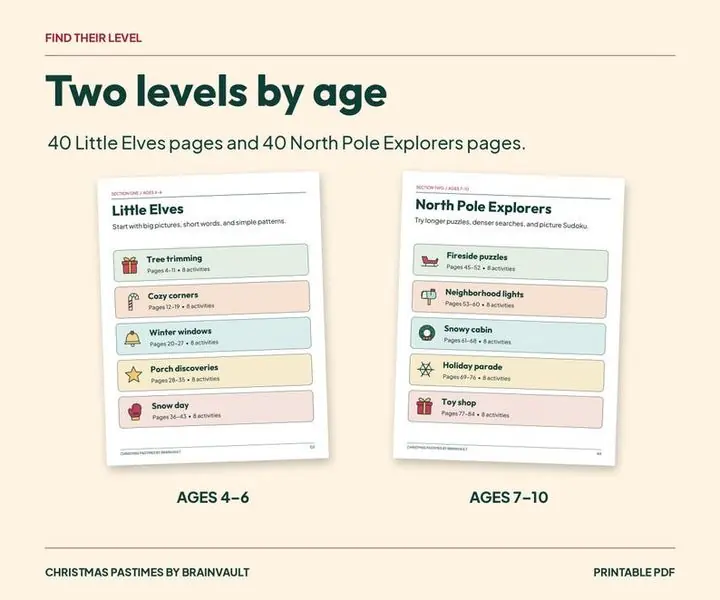
Kids Christmas Activity Pack
80 activities in two age levels (4–6 and 7–10): mazes, word searches, dot-to-dot, I-Spy, coloring, picture logic and more, with answer keys.
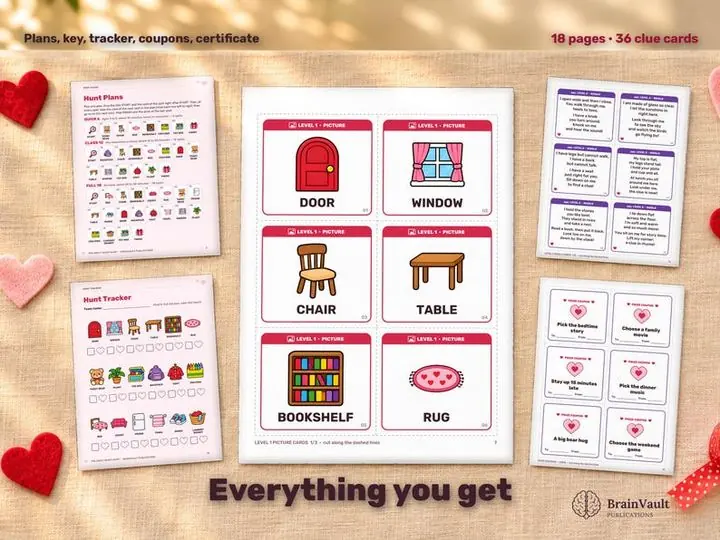
Valentine Scavenger Hunt
36 clue cards: picture cards for ages 3–5 and rhyming riddles for ages 6–10, plus prize coupons. A sweet indoor hunt for February.
Year-round puzzle adventures for ages 8–11
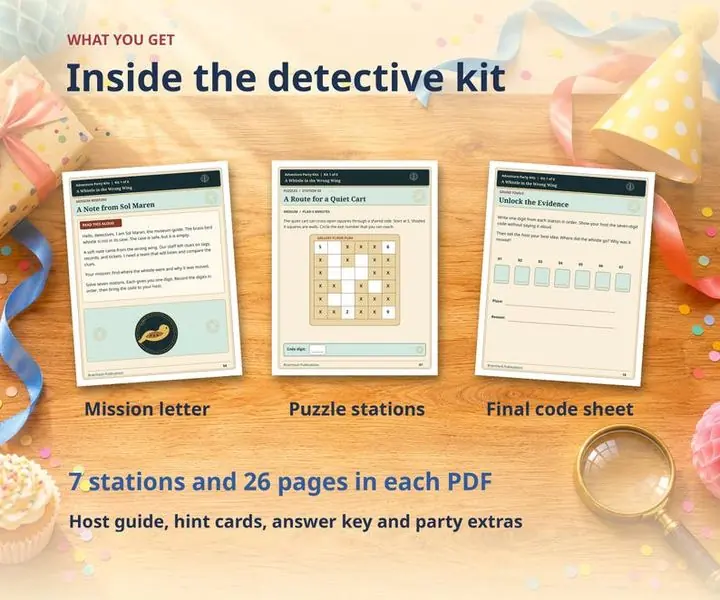
A Whistle in the Wrong Wing
A detective mystery with 7 puzzle stations, three levels of hints and a finale. Made for birthdays, and just as good for a sleepover or a family game night.
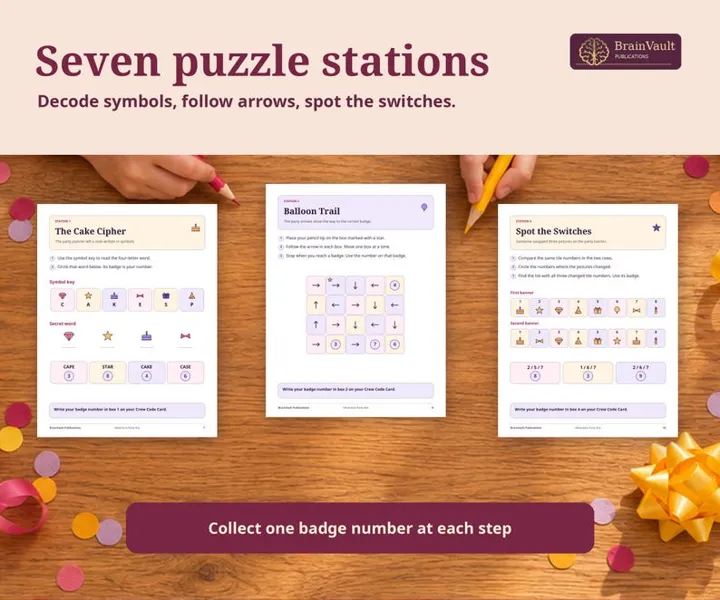
The Great Birthday Gem Hunt
A shorter treasure hunt with 7 puzzles that plays in 15–45 minutes. Great for a rainy afternoon with friends.
Looking for something for a celebration? See our guides to Christmas party games, Valentine's class party games and birthday party games for ages 8–11.
Sources
- HealthyChildren.org (American Academy of Pediatrics): Helping Kids Thrive in a Digital World: AAP Policy Explained
- HealthyChildren.org: Managing Screen Use During Long, Cold Winters (the "I'm bored" jar)
- HealthyChildren.org: School Breaks: Swap Screens for Play
- HealthyChildren.org: Family Media Plan
Questions parents ask
How much screen time is OK for kids?
The AAP no longer sets one number for every child. It suggests a Family Media Plan, high-quality content, screen-free meals and bedrooms, and screens off the hour before bed, so screens don't replace sleep, activity and time together.
What can kids do instead of screens?
Quiet activities like coloring, mazes and reading; hands-on projects like building and baking; active games indoors and out; and family games, puzzle hunts and mysteries. The 35 ideas above are a good place to start.
How do I get my child off the tablet without a fight?
Agree on the plan in advance, give a five-minute warning, and have an appealing next activity ready. An "I'm bored" jar helps, because the choice comes from a slip, not a parent.
Are printable activity pages good for kids?
They're an easy screen-free option to keep on hand. Mazes, I-Spy, dot-to-dot and word searches are quiet, satisfying and easy to match to a child's age.
Is boredom bad for kids?
Not at all. A little unstructured time helps children practice creativity and learn to entertain themselves.
Will anything be mailed to me?
No. Our printables are instant PDF downloads that you print at home.